AI Coach Product Launch
Grew AI Coach adoption from 0.6% to 4.63% of monthly active users through a human-centered launch and visual system.
Overview
AI Coach was an interesting challenge, we weren't just trying to make AI feel exciting, it was making it feel human… within a market saturated with new tech and an audience suffering from AI fatigue. Our biggest differentiator over standardized LLM generations were that all of Coach's responses were grounded in People Science. We were taking something built from over 1.3 billion data points from high-performing teams, and asking people to trust it with personal workplace questions.
This tension gave us an opportunity to rethink what an AI product could feel like, rather than defaulting to what was recognizable. The opportunity for impact in day-to-day work-life became the anchor for how I approached this project.
The work supported a period of strong adoption, with AI Coach growing from 0.6% to 4.63% of monthly active platform users. During one standout week, more than 4,000 people sent messages to AI Coach, with 73% engaging for the first time.
Challenge
When we asked people to trust AI Coach with personal workplace challenges, we needed to convey that rather than sifting through paragraphs from ChatGPT or Claude assuming your problems and providing common resolutions for them; the experience with AI Coach was different. It was going to use the data lake of over 1.3 billion people science insights shaping real, contextual reasoning that no generic tool could match.
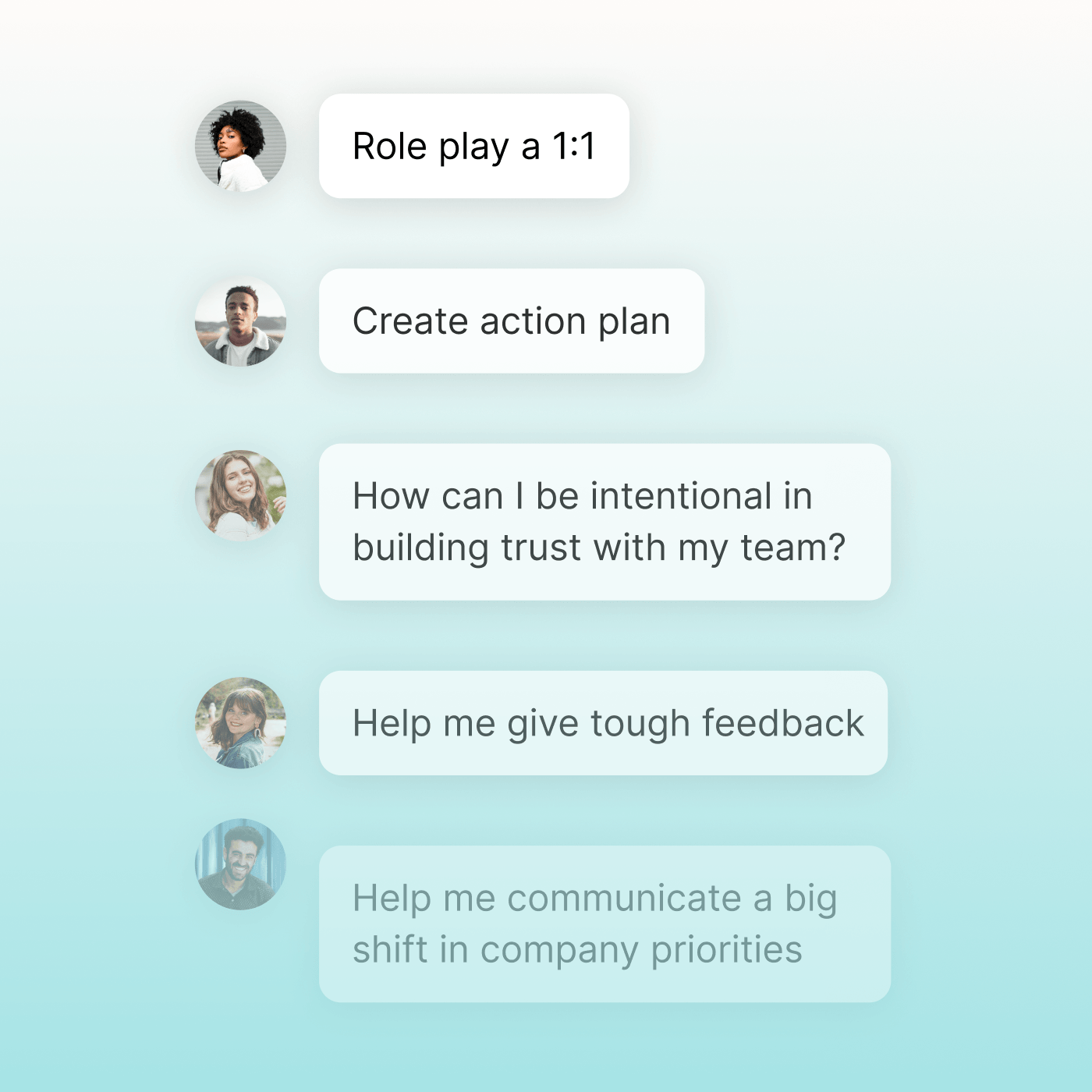
It could provide action-oriented workflows; or a deeper understanding of what your engagement scores indicate; or if you needed help role-playing delivering tough feedback.
That doesn’t always land just by stating it and product screens showing an AI conversation can begin to look interchangeable after a few prompts.
Solution
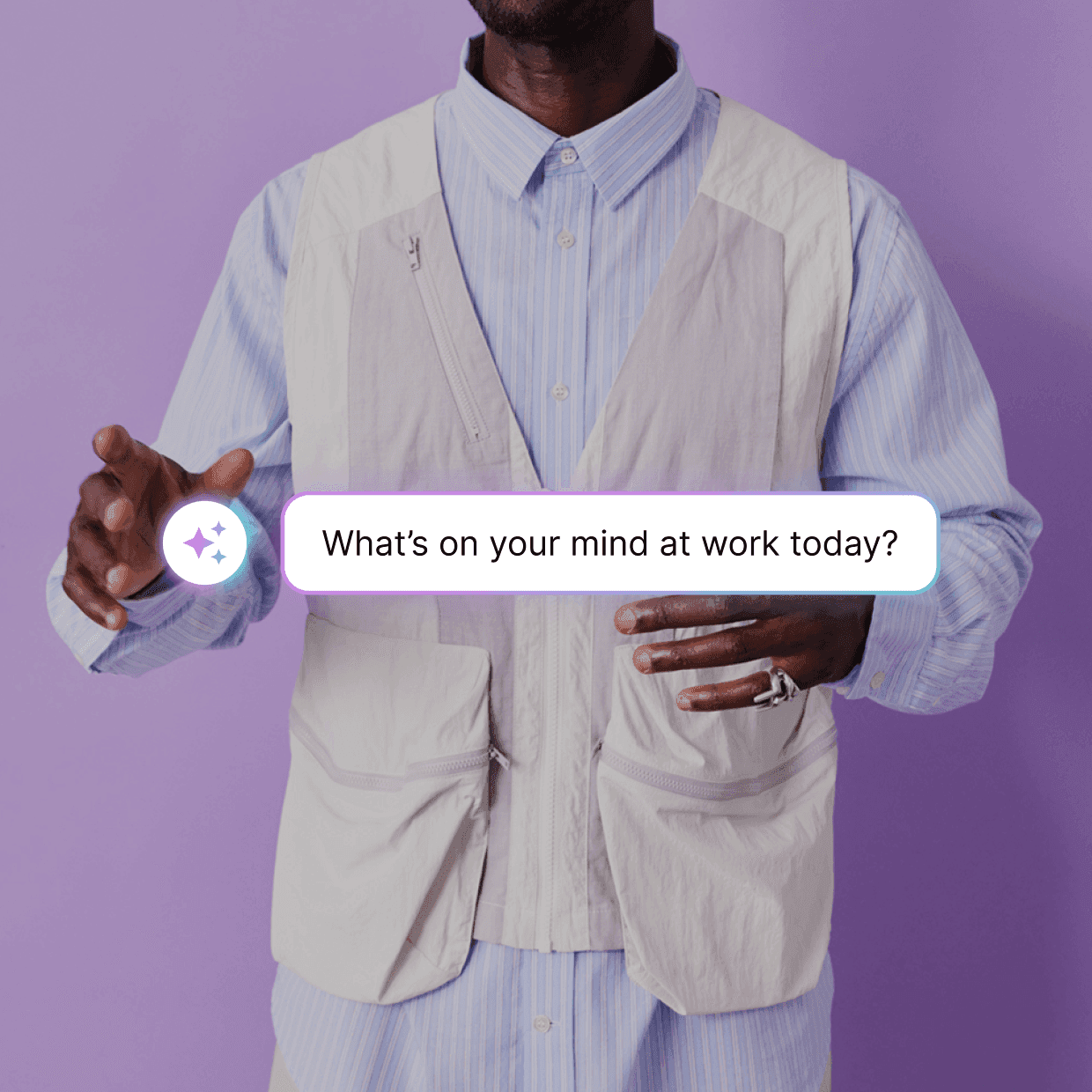
AI Coach's power wasn't just what you could achieve, it was the depth of the conversation. We opened with a very simple but engaging way to get started, "Hi, what's on your mind today." We established a series of high-value challenges managers would face: such as navigating difficult conversations, identifying burnout risks from survey data, drafting comms for different levels of visibility, and role-playing so you felt confident to take action.
Where possible, we leveraged photography to bring focus to who the tool was for, in ads and on the homepage, reinforcing the same point: this was about navigating a person’s challenges, not the technology behind it.
Process
I led the design decisions across the campaign and designed the homepage, working directly with the web properties team through execution while leadership signed off on final direction. That opening moment carried through everywhere, even the smallest spaces like email signatures, keeping the same human tone consistent across every touchpoint.
I took the gradient system and icon the product teams had already established and elevated them for marketing: refining and adapting the gradients and bringing the icon to life through motion, subtle glows in borders and fills, and micro-animations that gave the shared visual language more presence in campaign work.


Reflection
What actually resonated was seeing people's own challenges visualised, building awareness that something they'd normally either react to in the moment, or require setting aside real time for, could now be navigated with speed and intention at once.
The icon work became a small proof point for what more motion could do here, and led to workshops between marketing and product design exploring the next evolution of AI Coach's visual identity, beyond a shared system into something distinct enough to be recognized on sight.
Impact

